
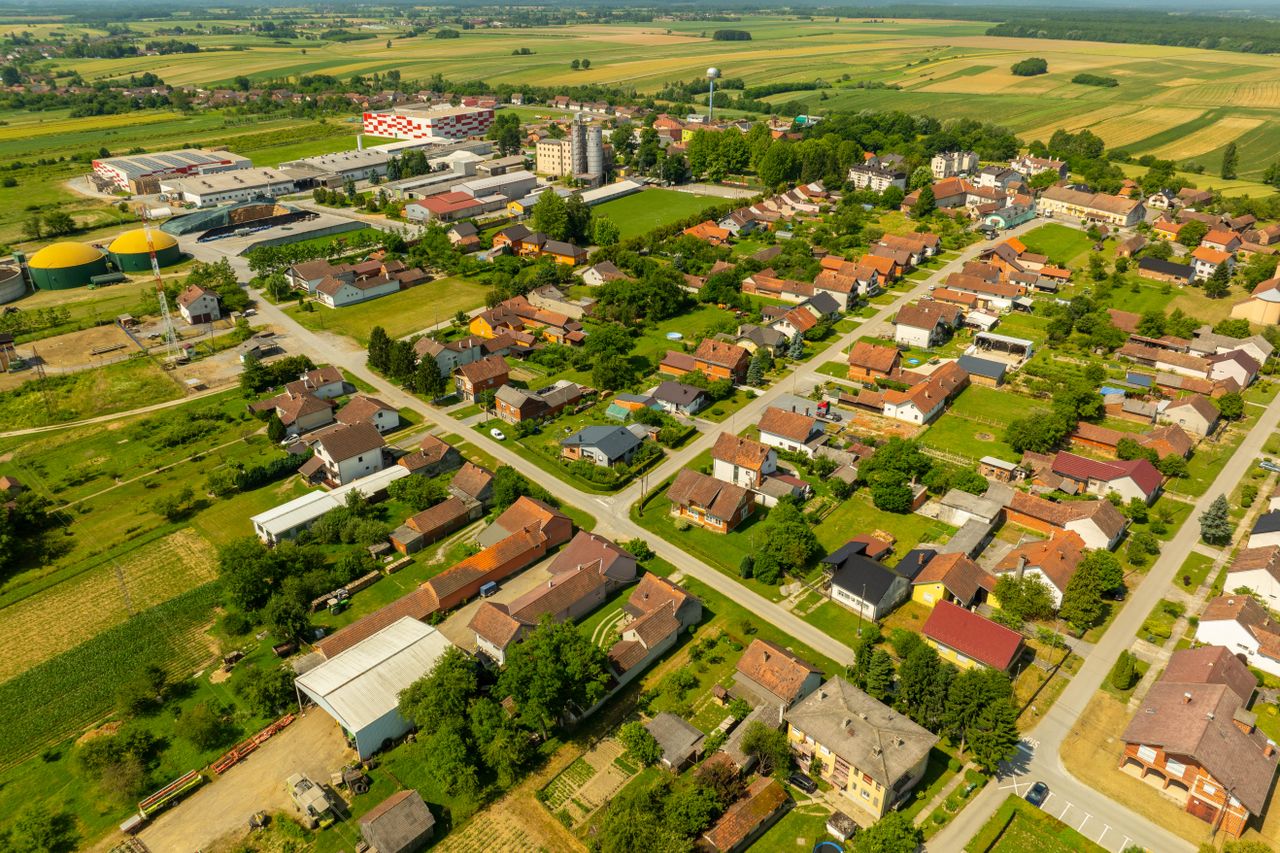
A small-scale farm biogas digester typically generates between 5 kW and 30 kW of continuous electrical output, enough to power farmhouse electricity, water heaters, and some barn equipment on a mid-sized livestock operation. Actual output depends on herd size, manure volume, digester type, and whether the gas runs through a combined heat and power (CHP) unit. A 50-cow dairy farm, for example, can realistically support a 10-15 kW system running around the clock.
Basics of Farm Biogas Digesters
A small-scale biogas digester is a sealed tank or bag system that breaks down organic material – mainly livestock manure – through anaerobic digestion, a biological process where bacteria decompose waste in the absence of oxygen. This process produces biogas, a mixture of roughly 55-65% methane content and carbon dioxide, which can be burned to generate electricity, heat, or both. Most farm units use mesophilic digestion, operating at moderate temperatures around 35-38°C, because it’s more stable and forgiving than higher-temperature alternatives.
The appeal for farm owners is straightforward: renewable energy from livestock waste turns a management headache – manure disposal – into a continuous, on-site fuel source. Instead of letting methane escape into the atmosphere from open manure lagoons, a digester captures it and converts it into usable power, while also reducing odor and pathogen loads.
Sizing and Output Estimation
Estimating the right digester size and expected output follows a fairly predictable sequence. Use this checklist before committing to a design:
- Count your livestock units – a mature dairy cow produces about 1.5-2.5 m³ of biogas per day from its manure, while pigs and poultry yield less per animal but are often raised in higher density.
- Calculate daily manure volume – a 50-cow dairy herd generates enough manure to feed a digester producing roughly 100-120 m³ of biogas daily under normal conditions.
- Match biogas yield to generator capacity – as a rule of thumb, about 15-20 cows worth of manure is needed to sustain a 10 kW generator running continuously.
- Determine digester volume and footprint – a system for a 50-cow farm usually needs a tank of 300-500 m³ and a plot of land between 0.1 and 0.3 hectares, including storage and access space.
- Account for retention time – manure typically needs 20-30 days inside the digester for mesophilic digestion to fully break down organic solids and maximize gas yield.
Output estimates assume dedicated manure collection and consistent feeding of the digester. Seasonal grazing, bedding type, and manure dilution with water can all reduce biogas yield by 10-20%, so real-world numbers often land on the lower end of published ranges.
Costs and Return on Investment
Installation costs and payback periods vary with system complexity, but typical figures for a small farm-scale setup look like this:
- Installed cost: a complete digester plus CHP unit for a small farm generally runs from $15,000 to $60,000 for systems in the 5-30 kW range, depending on tank construction and automation level.
- Operating costs: routine maintenance, mixing pumps, and CHP servicing typically add $1,000-$4,000 per year.
- Payback period: most small farm systems recover their investment in 5-8 years, depending on electricity prices avoided and any feed-in tariff or export payments received.
- Support programs: in the US, the USDA REAP grant can cover a portion of eligible renewable energy project costs for agricultural producers, and many other countries offer similar agricultural clean energy incentives.
Farms that also use the digestate – the nutrient-rich residue left after digestion – as fertilizer can improve overall returns by cutting purchased fertilizer costs, which isn’t always captured in simple electricity payback calculations.
Comparisons With Other Energy Sources
Deciding between a biogas digester, rooftop solar, or staying on the grid depends on farm type and existing infrastructure.
- Generates power around the clock, unlike solar which depends on daylight
- Simultaneously manages manure and reduces odor
- Produces digestate usable as fertilizer
- Qualifies for agricultural-specific grants like USDA REAP
- Solar panels have lower maintenance and no biological process to manage
- Grid connection avoids upfront capital cost entirely
- Solar installation is typically faster, often weeks not months
- Grid power is cheaper where rural electricity rates are low
In practice, many farms combine options: solar panels cover daytime peak loads cheaply, while a biogas digester provides baseline power and handles manure management that solar cannot address. For farms already exploring broader renewable options, comparing renewable energy sources side by side helps clarify which combination fits the operation’s electricity use pattern and manure volume.
Practical Operation and Power Use
A properly sized digester can comfortably power a farmhouse and barn equipment – lighting, water pumps, milking machines, ventilation fans – though very high-draw equipment like grain dryers may still need grid backup during peak demand. The core of the system is the CHP unit, which burns biogas in a modified internal combustion engine or gas turbine connected to a generator, producing electricity and recoverable heat simultaneously. That heat is often routed back to warm the digester itself, improving overall system efficiency to 60-80% when both power and heat are counted.
Excess electricity beyond farm needs can often be sold back to the grid through a feed-in tariff or net metering arrangement, though availability and rates depend heavily on local utility policy. After digestion, the remaining digestate is typically separated into liquid and solid fractions – the solids can be used as low-odor bedding or compost, while the liquid serves as a nutrient-rich crop fertilizer, closing the loop on farm waste management.
Farm-Type Specific Use Cases
Biogas digesters suit different operations in different ways:
- Dairy farms are the most common adopters, since manure is already collected daily in barns and lagoons, making feedstock logistics simple and consistent.
- Poultry farms can be profitable with digesters, but litter’s high ammonia content requires careful dilution and monitoring; smaller operations often co-digest poultry waste with other organic material to stabilize the process.
- Cold-climate farms can still run digesters year-round, but tanks need insulation and sometimes supplemental heating to maintain mesophilic digestion temperatures through winter, which adds to both capital and operating costs.
Farms exploring broader biotech applications on top of digestion, such as genetically enhanced microbial strains for faster breakdown, may find relevant context in ongoing biotechnology in renewable energy research.
Maintenance and Common Pitfalls
Several recurring mistakes reduce digester performance or shorten equipment life:
- Undersizing the digester for projected herd growth, leading to incomplete digestion and reduced gas yield within a few years of operation.
- Neglecting pH and temperature monitoring, which can crash bacterial activity and stop gas production for weeks.
- Allowing bedding material or excessive straw into the feedstock, which clogs pumps and mixers.
- Skipping routine CHP servicing, shortening engine life and increasing unplanned downtime.
- Underestimating digestate storage needs, resulting in overflow or forced early land application outside optimal spreading windows.
An undersized system doesn’t just underperform – it can also create a backlog of unprocessed manure, forcing farms back toward conventional storage and losing much of the environmental benefit the digester was meant to provide.
A single dairy cow produces enough manure daily to generate roughly the same amount of biogas energy as burning about 0.5-0.8 liters of diesel fuel – meaning a herd of 50 cows can offset a surprising amount of on-farm fossil fuel use once converted through a CHP unit.
Before investing, run a 12-month manure volume audit rather than relying on herd averages – seasonal grazing and bedding changes can shift actual feedstock availability enough to change your ideal generator size by several kilowatts.
For farms wanting a deeper technical look at how modern systems are engineered beyond the basics, modern biogas plants offer a useful reference point for scaling up from single-farm installations to community-level systems.
Final thoughts
A small-scale biogas digester can realistically power a single farm’s house, barn, and core equipment, generating anywhere from 5 kW to 30 kW depending on herd size and feedstock consistency. The economics work best for farms that already manage daily manure collection, such as dairy operations, where payback typically falls within 5 to 8 years once grants and avoided electricity costs are factored in. Success depends less on the technology itself and more on accurate sizing, consistent feedstock supply, and routine maintenance of both the digester and the CHP unit – skip any of these, and even a well-designed system will underdeliver.
Frequently asked questions
Can a biogas digester work on a farm with fewer than 20 cows?
Yes, but output will be modest. A herd under 20 cows typically generates only 1-3 kW of continuous electrical capacity, which may only cover basic lighting or water heating rather than a full house and barn load. Many small farms combine manure with other organic feedstocks like crop residues or food waste to boost gas yield.
How long does a biogas digester last before major repairs are needed?
Well-maintained digester tanks and membranes typically last 15-20 years, while the combined heat and power (CHP) unit's engine usually needs an overhaul or replacement every 8-10 years depending on run hours. Regular monitoring of pH, temperature, and gas composition extends service life significantly.
Is permitting required to install a farm biogas digester?
Most regions require environmental and building permits covering manure storage, odor control, and grid interconnection if you plan to export electricity. Requirements vary by country and farm size, so checking with local agricultural extension offices or environmental agencies before construction is essential.
Can biogas digesters process food waste alongside manure?
Yes, co-digestion with food waste, fats, or crop residues can significantly raise biogas yield per cubic meter of digester volume compared to manure alone. This is a common strategy for farms looking to increase output without expanding herd size, as covered in related research on converting food waste into usable biogas.
Sources:
– US Department of Agriculture, Rural Energy for America Program (REAP) program guidance
– US Environmental Protection Agency, AgSTAR program on biogas recovery systems for livestock operations
– International Energy Agency, Bioenergy Technology Collaboration Programme reports on anaerobic digestion
– National Renewable Energy Laboratory, publications on small-scale biopower and combined heat and power systems
– Food and Agriculture Organization of the United Nations, guidance on biogas for agriculture and rural energy